GHK-Cu explained: skin, tissue and the research context
The copper-binding tripeptide at the centre of skin and tissue research.
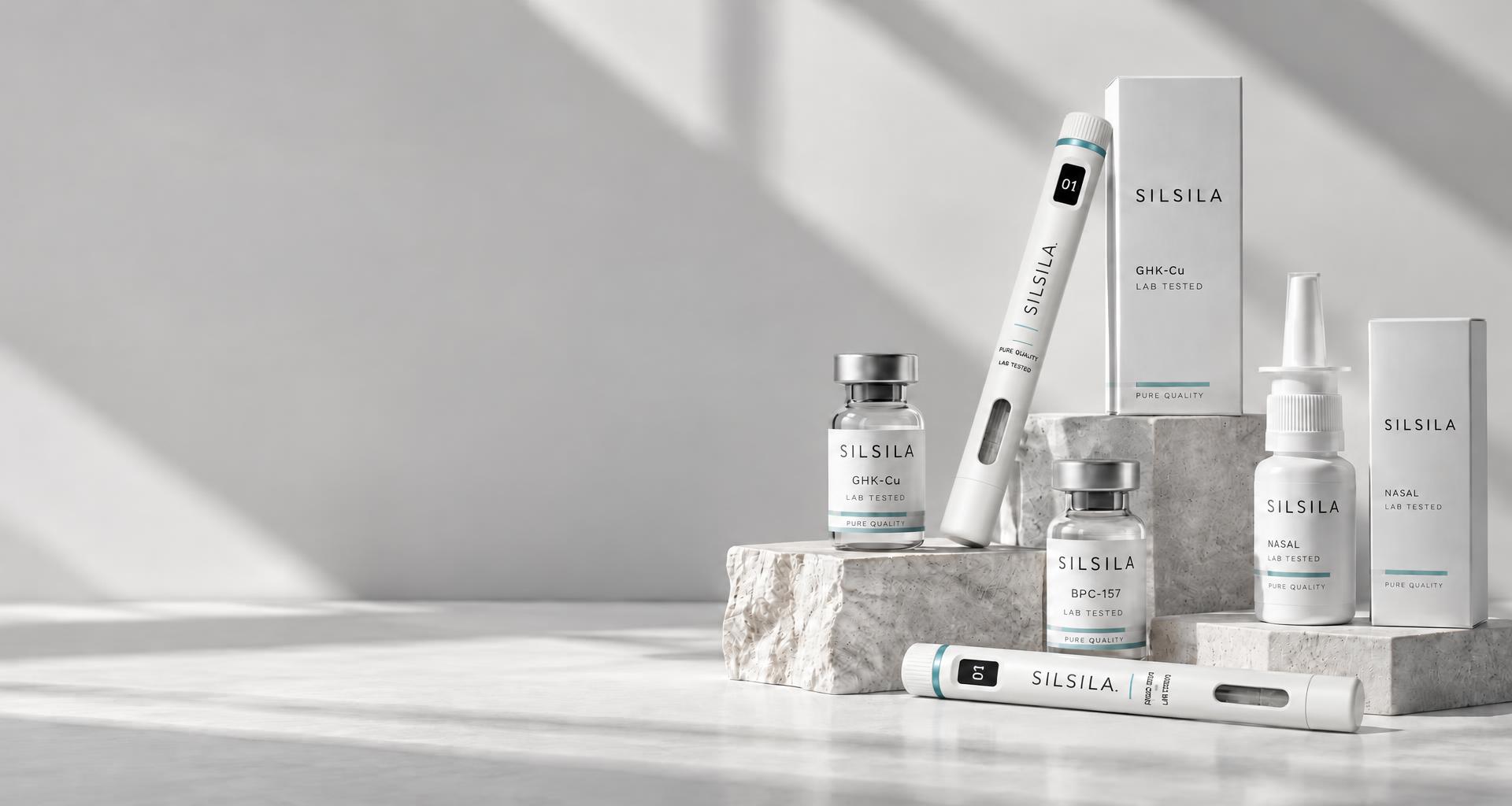
Research context
GHK-Cu is a naturally occurring tripeptide with a high affinity for copper ions. It is widely studied in models of collagen expression and gene regulation.
Reading the evidence
Much of the available literature comes from cell and animal models. Findings should be read with attention to study design, sample size and whether results have been independently replicated.
A note on use
Silsila products are presented for laboratory research only. Nothing in this journal is medical advice, and no product is intended for human or veterinary use.
Sources & evidence
GHK Peptide as a Natural Modulator of Multiple Cellular Pathways in Skin Regeneration
The review discusses copper-binding GHK and experimental skin-related findings; it does not establish the effects of Silsila products.
Read original sourceA study indexed in PubMed or hosted on PMC is not NIH or FDA approval. Findings for approved medicines do not establish the safety or effectiveness of Silsila products.