BPC-157 and TB-500: reimagining repair research
What the published evidence establishes—and what remains uncertain about these research compounds.
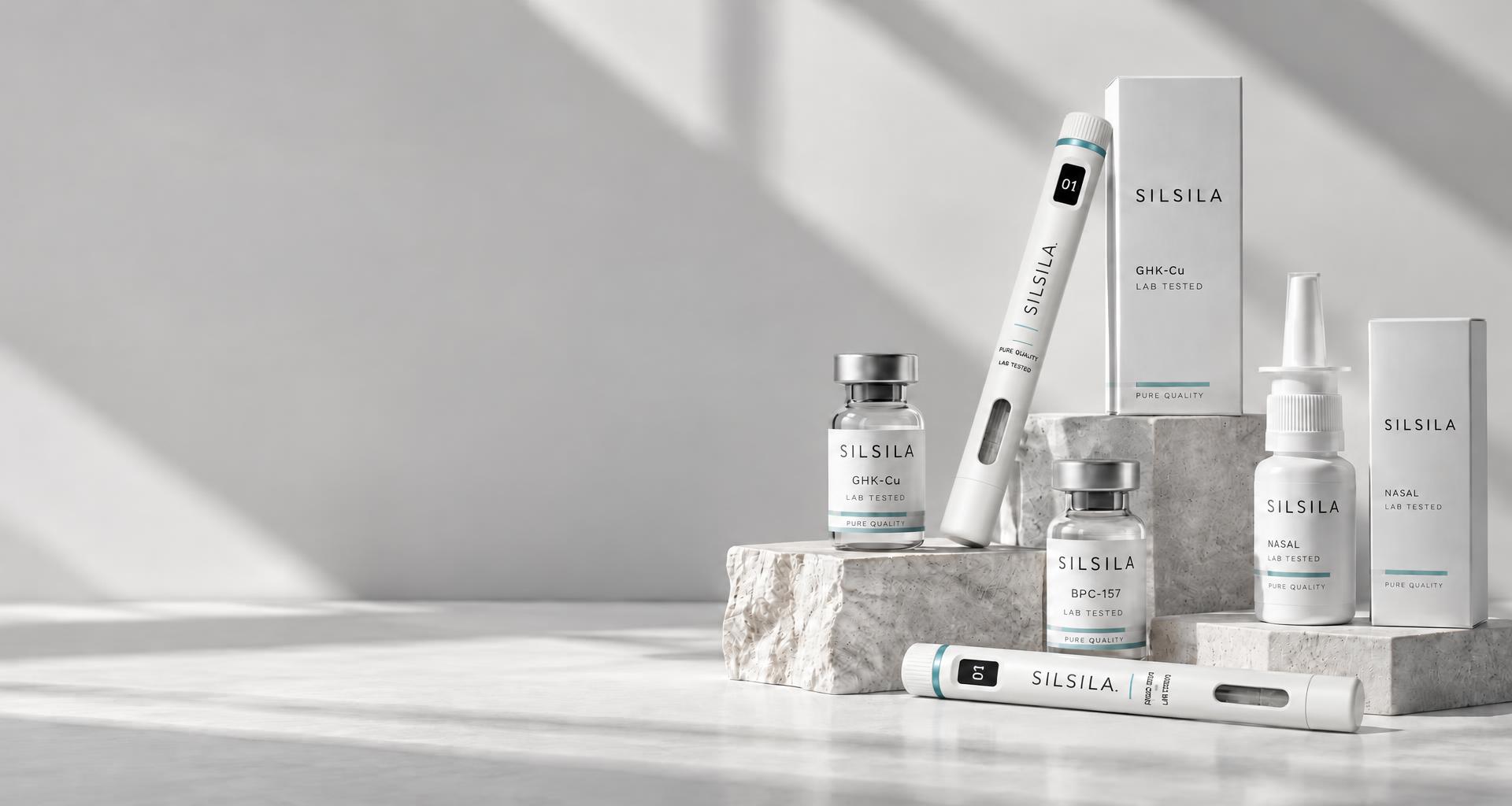
Research context
A systematic review describes BPC-157 research as mainly preclinical, with limited human evidence. TB-500 is related to thymosin beta-4, but evidence about the full protein does not automatically establish the effects of TB-500 or of combining it with BPC-157.
Reading the evidence
Much of the available literature comes from cell and animal models. Findings should be read with attention to study design, sample size and whether results have been independently replicated.
A note on use
Silsila products are presented for laboratory research only. Nothing in this journal is medical advice, and no product is intended for human or veterinary use.
Sources & evidence
Emerging Use of BPC-157 in Orthopaedic Sports Medicine: A Systematic Review
The review describes predominantly preclinical BPC-157 research and limited human evidence, and notes the absence of US FDA approval. It does not validate TB-500 or the combination.
Read original sourceCertain Bulk Drug Substances for Use in Compounding that May Present Significant Safety Risks
The FDA discusses limited safety information and potential risks for BPC-157 and the thymosin beta-4 fragment TB-500. Research findings are not regulatory approval or proof of safe human use.
Read original sourceA study indexed in PubMed or hosted on PMC is not NIH or FDA approval. Findings for approved medicines do not establish the safety or effectiveness of Silsila products.